
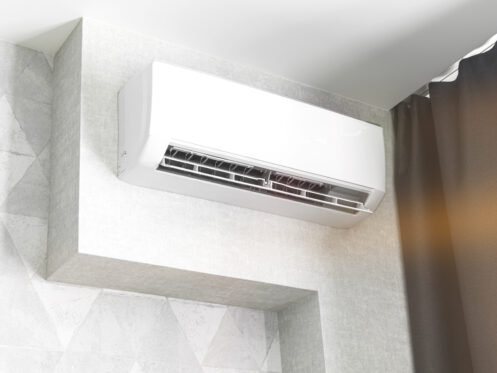
Ductless mini-splits have become popular among Dayton, OH, property owners in recent years. As the climate transitions from cold winter weather to hot summer weather, you need a heating and cooling system to manage the temperature swings. Instead of using different central HVAC systems, you can invest in a ductless mini-split, as it has heating and cooling abilities. Besides, they have several benefits that make them well-suited for the spring season.
Understanding Ductless Mini-Splits
Unlike central systems that control the temperature of an entire house, ductless mini-splits regulate the condition of rooms where there is an indoor unit. To do this, they have three parts. The blower or evaporator unit is located inside the house where you need heating or cooling. This is connected to the condenser (outdoor unit) through a conduit, which is a long, thin cable that carries the refrigerant tubing and power cable. The conduit passes through a small hole in the exterior wall.
During warm days, the evaporator unit takes the air from the house and blows it over the cold evaporator coils. The refrigerant in the coils absorbs the heat, and the cooled air flows back to the house. The warm refrigerant is then passed to the condenser through the conduit, and the heat and moisture are released into the outdoor air. During cold days, heat is pulled from the outdoor air and moved by the refrigerant to the house.
Benefits of Ductless Mini-Splits in Spring
The benefits of using a ductless mini-split go beyond the duality of function. Here are some reasons why you can use these systems for your home this spring.
1. Easy Installation
Traditional HVAC systems require extensive ductwork for the distribution of conditioned air throughout a home. The ductwork installation process can be time-consuming and requires lots of space. This makes it hard to install in old homes as it requires drilling large holes to allocate the passage between rooms. Ductless mini-splits offer a quicker and easier installation process because they have fewer components. A technician makes a small hole in the wall to pass the conduit through. They mount the outdoor and indoor units and connect the refrigerant and power lines. You can prepare your home for the spring season without the hassle and disruption of a lengthy installation.
2. Energy Efficiency
Ductwork is responsible for the loss of quite a bit of energy in a home. A system can have leaks where there are gaps or cracks. This allows the conditioned air to escape into the surrounding areas as unconditioned air leaks into the system. Some ducts are poorly insulated and allow heat to transfer between the environment and the system. Sometimes, dirt and debris can accumulate in the duct and restrict airflow. This results in uneven air distribution. When this happens, the HVAC system must work harder to pass air through the blocked ducts and deliver the expected temperature levels.
One of the primary benefits of ductless mini-splits is their energy efficiency. Unlike traditional HVAC systems, they deliver conditioned air directly to the desired space. This eliminates energy loss, and you can enjoy reduced energy bills.
3. Zoning Capabilities
Sometimes, it can be hard to decide on the proper temperature settings in your home when there are several occupants. Also, some rooms may be warmer than others due to direct exposure to sunlight or the activities in the room. For instance, a home gym and the kitchen may require more cooling than other parts of the house. In buildings with multiple levels, the upper floors can be warmer than the lower ones. This happens because of the natural rising of warm air. These temperature imbalances can create discomfort. With a traditional HVAC system, it is hard to meet the needs of different rooms unless you invest in an additional zoning system.
Ductless mini-splits have built-in zoning capabilities, allowing different areas of the home to be cooled or heated independently. This feature is especially beneficial during the spring season when temperatures can fluctuate throughout the day. The house is divided into different parts (zones), and an indoor unit is installed in every part. You can then control the temperature by programming the indoor units to operate on the desired schedule. This also contributes to energy savings because you do not have to condition rooms that are not in use.
4. Better Air Quality
Traditional HVAC systems have air filters that trap airborne pollutants from the air flowing into the systems. These should be cleaned or replaced regularly, depending on the recommendation of the manufacturer. It is easy to forget to keep them clean. As the system works to draw in air, dirt can blow into the system and flow to the ductwork. Pests like rodents can build nests in the ducts and release fur, which further makes them dirty. When the air flows through the system, it can pick up the dirt particles and distribute them into the house. This compromises indoor air quality.
This problem can be worse in the spring because it is often associated with increased allergens in the air. Ductless mini-splits can contribute to better indoor air quality as they have filtration that captures dust, pollen, and other airborne particles. The lack of ducts also reduces the chance of dirt accumulation. Your family can find relief from allergic reactions and other respiratory problems.
5. Quiet Operation
Ductless mini-splits operate more quietly compared to central HVAC systems. The indoor unit is designed to work at a noise level of about 19 decibels, a sound that is as low as rustling leaves. The outdoor unit is located away from the indoor units to reduce the transfer of vibrations from the compressor. Additionally, the lack of ducts contributes to quiet operation. Ductwork is often made of materials that expand and contract as conditioned air flows through, a process that is accompanied by sounds. Changes in pressure also contribute to the noise.
6. Space-Saving Design
The compact design of ductless mini-splits makes them an attractive option for homes with limited space. The indoor air-handling units are sleek and can be mounted on walls or ceilings to blend in with interior décor. The reduced need for space makes them an ideal option for additions in older homes where there is no room for extra ductwork. They are also easily expandable because some ductless mini-split models can support up to eight units. You can add an indoor unit whenever the need arises. Since they use minimal space, you can hire a professional to install a second or third unit to cover any extra parts of your home.
When preparing to keep your home comfortable during spring, consider investing in a ductless mini-split. Our professionals at Universal Heating & Cooling can help you decide on a suitable model based on your requirements and budget. We have reliable technicians dedicated to providing all HVAC services to residents throughout Dayton. They can perform heating and cooling system installation, repair, and maintenance. Contact Universal Heating & Cooling today and let us help maintain your indoor comfort during spring and throughout the rest of the year.